November 17, 2026
National Butter Day
Contents:
- My Journey with Forgiveness & Reconciliation
- Thanksgiving Mass, No Adoration (11/25)
- This Week's Eucharistic Adoration (11/18)
- Reminder: Parish Office Closed for Turkey

My Journey with Forgiveness and Reconciliation
by an Anonymous Blessed Sacrament Parishioner
My friend couldn't help but notice my struggle to forgive a family member who had deeply wronged me, and she recommended a book that would become a turning point: Do Not Forgive Too Soon by Matthew Linn, Sheila Fabricant Linn, and Dennis Linn. This was the beginning of a profound period of reflection and prayer.
The call to forgive is clear in Scripture—seventy times seven, as Matthew tells us. I knew forgiveness was a personal journey toward peace, and I decided to embark on it. The first step was what I came to understand as the decision component of forgiveness. I chose to let go of the offense, a decision that starts as an intellectual one, and it is not easy. Letting go of the offense meant deciding to stop seeking vengeance, ruminating on the past, and speaking ill of the person. However, this didn't erase the spontaneous, strong emotions that flared up whenever I thought about the incident. So, I brought those raw feelings to prayer, asking for God’s grace to help me overcome them... He is still working on that.
Despite this initial progress, I felt confused and apprehensive about what true reconciliation might entail. I had forgiven them in my heart, but I was not yet ready to trust him again. I wanted to love and forgive the person, while simultaneously seeking a delicate balance between loving God, loving him, and loving myself.
My forgiveness did not mean that what he did was okay, nor did it require me to minimize the hurt or accept his actions. However, it helped me in this process to accept him in his duality as someone with many good qualities and with whom I have wonderful memories, as well as someone who has committed a serious transgression.
A family wedding is now on the horizon, and I will see the person again. I have been praying for the Holy Spirit's grace and wisdom to discern if reconciliation is the right path for me. While I believe God has a bias for reconciliation, I realize that reconciliation, unlike forgiveness, is a reciprocal process. It also requires justice—not as a thirst for revenge, but as a path to healing.
My next steps were to first, clearly and concretely state what the offense was and what it would take to satisfy it. What did I need from him to move forward with the relationship? This was about paying attention to my own feelings and setting boundaries to reclaim my dignity. It also involved loving him and helping him see himself as a beloved son of God.
The two-way street requires the cooperation of both parties. Will he accept responsibility for his actions? Is he repentant for them? Will he agree to respect the boundaries that have been set? Will he apologize? Is he doing his part to prevent that from happening again?
After much prayer, I found a creative solution that feels authentic to my journey. I sent him a message telling him that all the bad things he has done do not erase the good he has done, and the good things he has done do not erase the bad. I said that while I wasn't going to seek him out, I am praying for him and wish him wisdom and peace. This was my way of holding the tension of both love and necessary distance, a decision that felt true to my faith and myself.
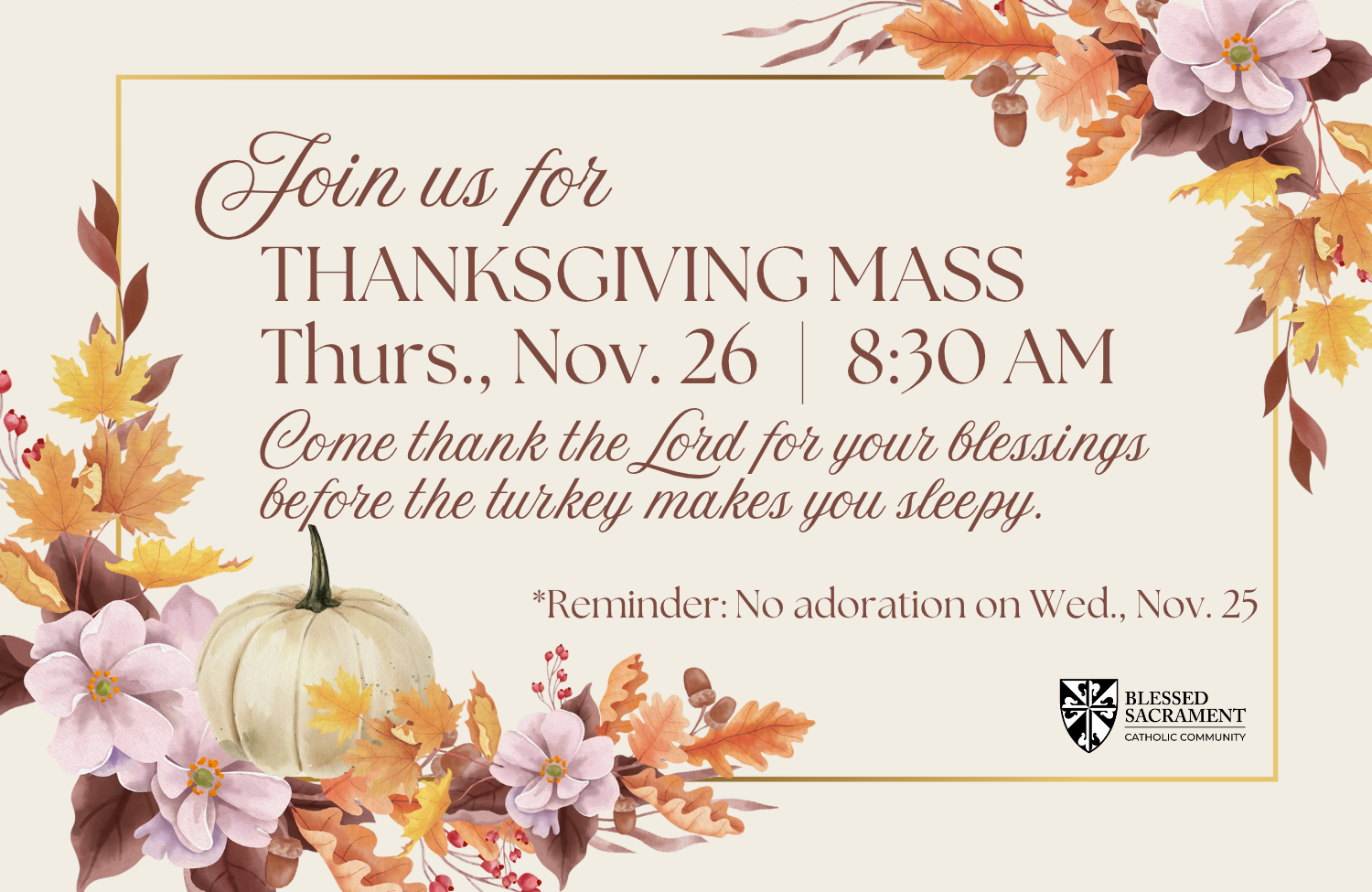
Join us for Thanksgiving Mass
Thurs., Nov. 26 | 8:30 AM
Come thank the Lord for your blessings before the turkey makes you sleepy.
Thurs., Nov. 26 | 8:30 AM
Come thank the Lord for your blessings before the turkey makes you sleepy.
*Reminder: No adoration on Wed., Nov. 25
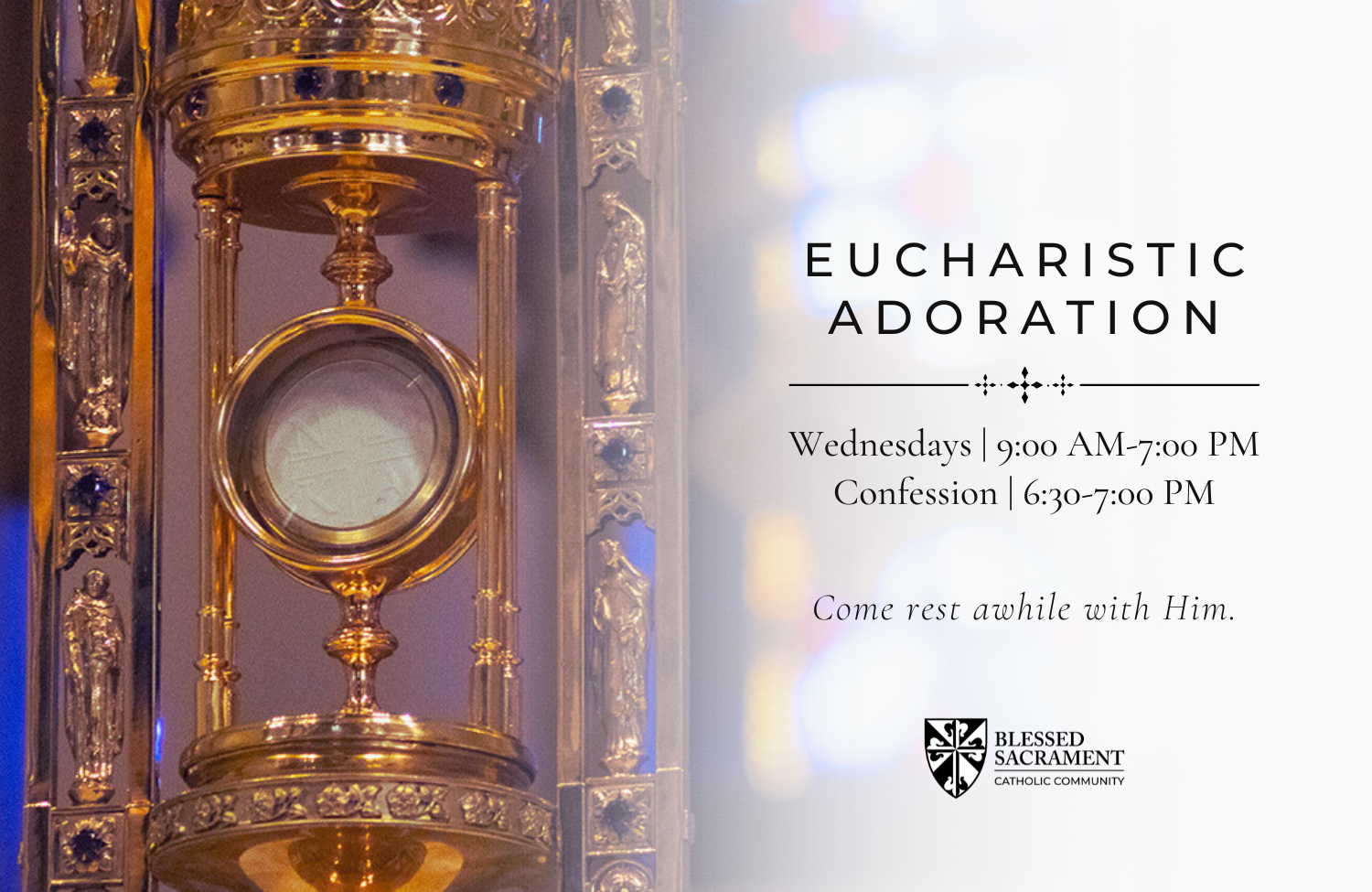
at the start of Adoration each Wednesday.
Do Not Abandon the Love You Had at First | November 18, 2026
...in this world, our love for God can always increase.
...in this world, our love for God can always increase.
Must increase, for the good of your own soul and for the good of the world.
Click the attachment to read more of this week's reflection.

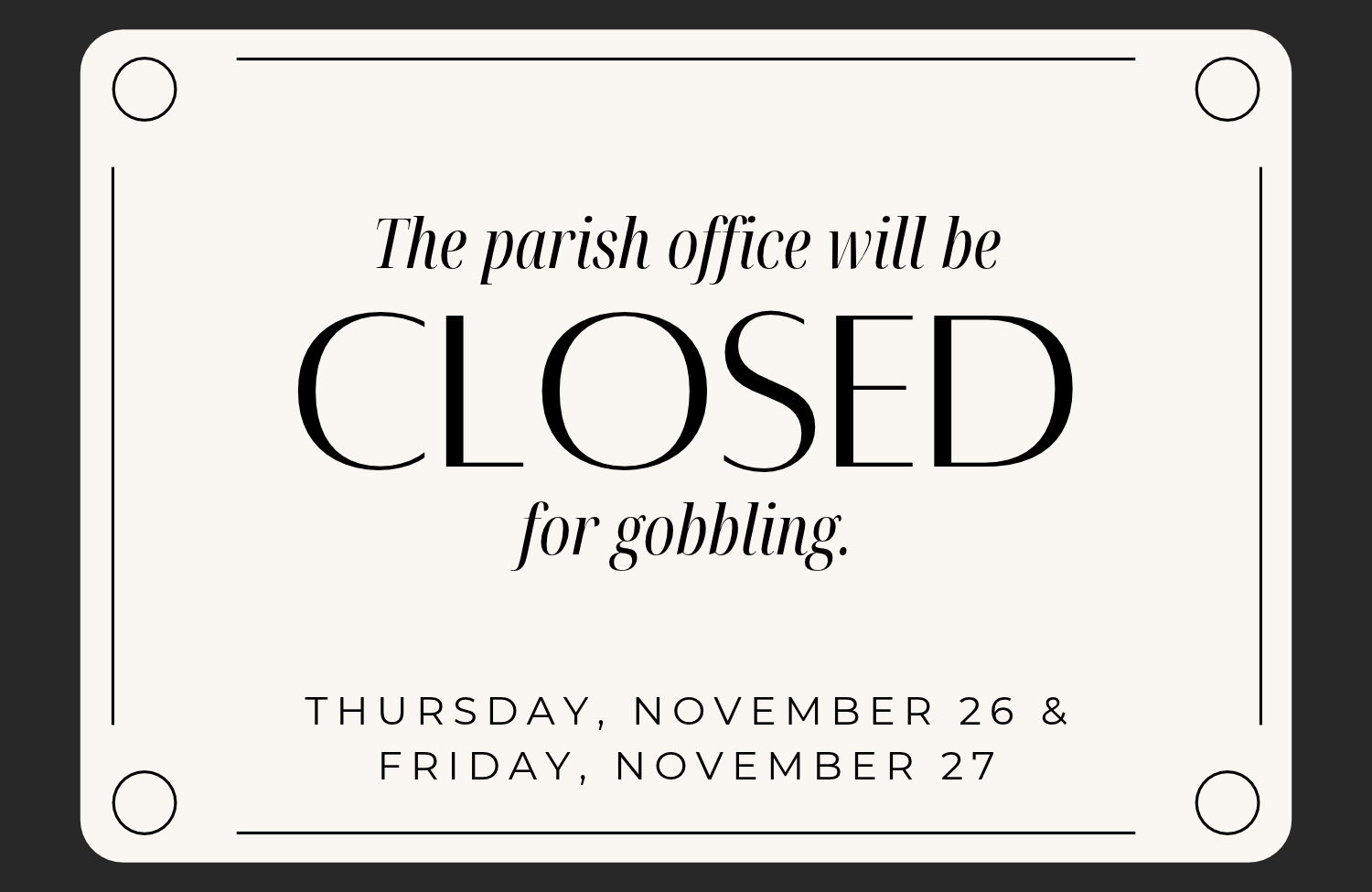
REMINDER:
The parish office will be closed on Thursday, November 26 and Friday, November 27 for Thanksgiving! Enjoy your turkey!
The parish office will be closed on Thursday, November 26 and Friday, November 27 for Thanksgiving! Enjoy your turkey!