November 10, 2026
Contents:
1) To Bear Arms or Not to Bear Arms?
2) Eucharistic Adoration
3) Altar Server Training TONIGHT!
1) To Bear Arms or Not to Bear Arms?
2) Eucharistic Adoration
3) Altar Server Training TONIGHT!
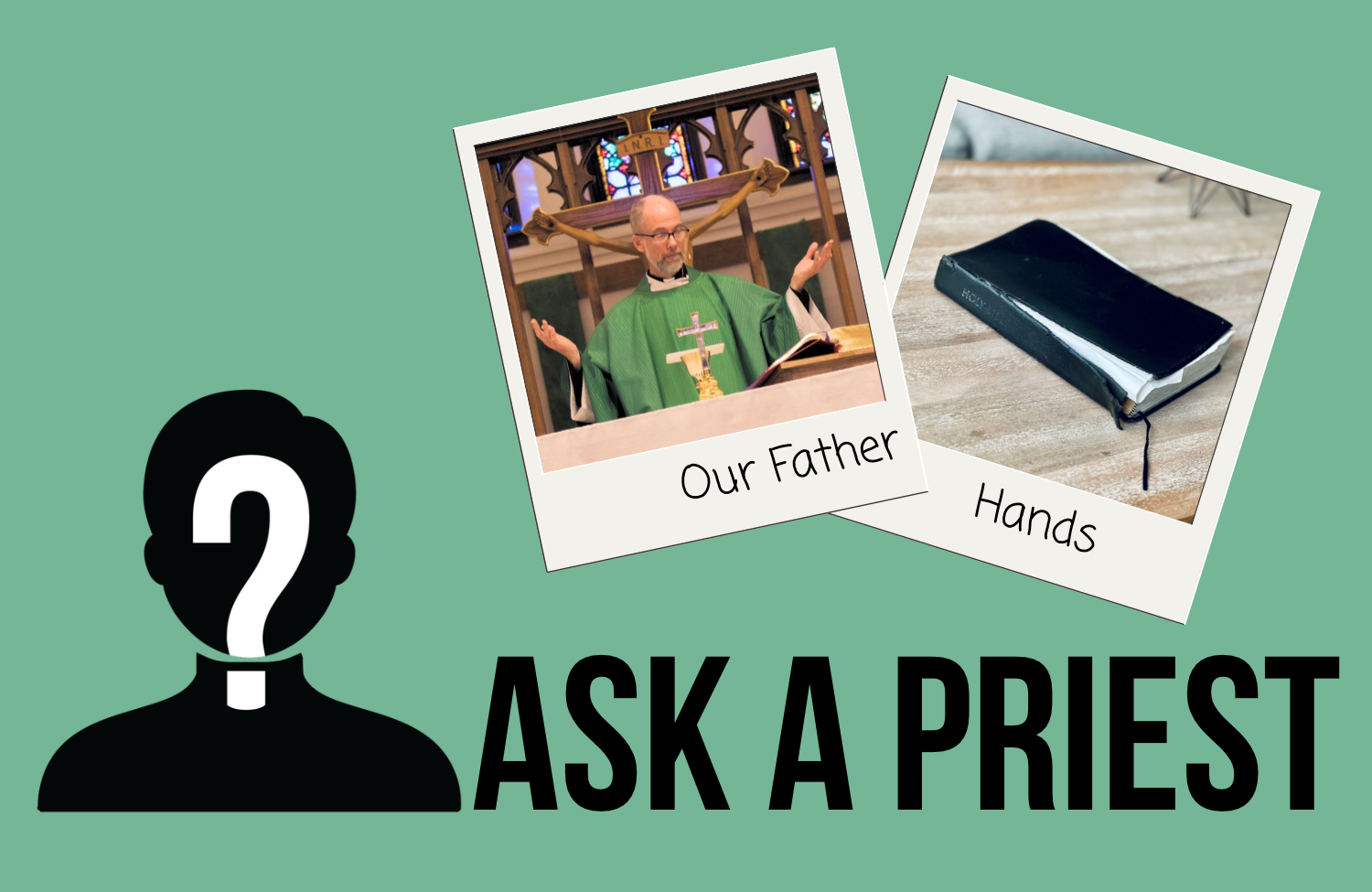
To Bear Arms or Not to Bear Arms
Dear Father,
Why do some people hold hands or mimic the outstretched arms of the priest during the Lord’s Prayer in Mass? I don’t remember people doing this when I was a kid. Should I be doing the same thing?
Sincerely,
Wacky, Inflatable-Arms
Wacky, Inflatable-Arms
_____
Dear Wacky, Inflatable-Arms,
Both holding hands and mirroring the celebrant’s orans posture (hands extended) are largely cultural.
Praying with outstretched arms goes back to Christianity’s Jewish roots. The Psalms speak of lifting up hands in prayer (Ps 141:2), and St. Paul urges the same (1 Tim 2:8). The earliest Christian art, including the catacomb paintings, shows lay people praying this way, too. (Orans is Latin for “praying.” It describes how the ancients beseeched and thanked God with arms outstretched.)
Look to Latin America, and you’ll find the gesture extremely common. Some people reach upward as if talking to God in a charismatic manner. Holding hands is an extension of that gesture, as we are all children of God, one big family. In the parishes I know, people even hug during the Our Father, like we do at Badger games while singing “Varsity.” That’s a lot of brotherly love! In the U.S., holding hands spread in the 1970s, mostly through charismatic and small-community influence.
If you don’t remember this from childhood, it probably just wasn’t the norm at your parish.
The orans posture is required of the priest as the main celebrant during the Our Father (General Instruction of the Roman Missal, no. 152). He does this because the Church designates him to pray officially in the name of the entire Body of Christ, in persona Ecclesiae. It is not required of the laity.
It is also not prohibited. The rubrics say nothing about what the congregation does with its hands. A layperson who extends hands isn’t taking on the priest’s role, just praying as a child of God. Neither is it a sin to keep your hands folded or at your sides. God won’t smite you either way. The worst case is a funny look or two.
So there’s no one-size-fits-all. The gesture is neither prohibited nor required. Don’t force your neighbor to do it, and don’t shame those who do.
In Jesus,
Your Friendly Resident Latin American Priest

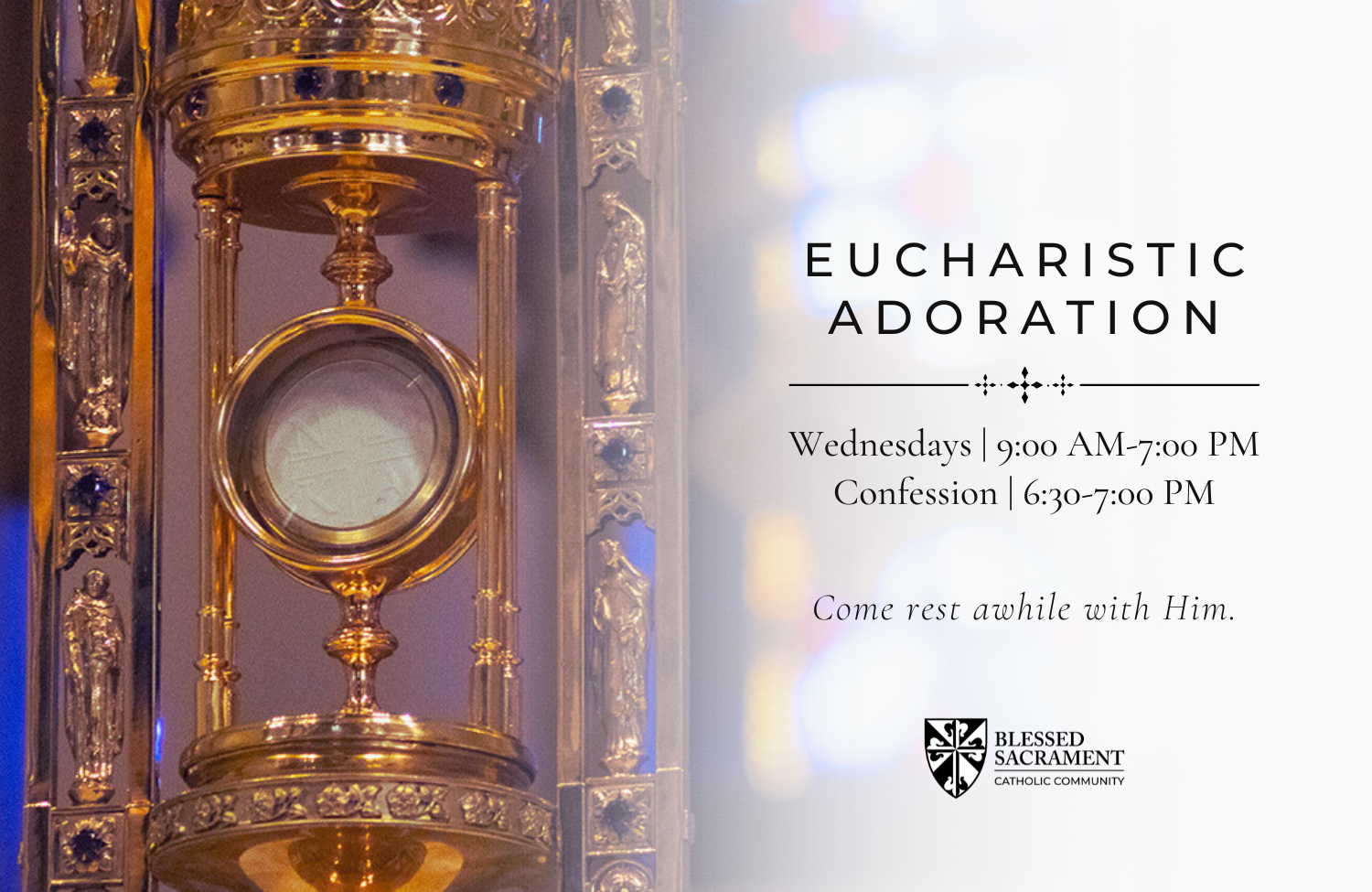
at the start of Adoration each Wednesday.
Our God So Near | November 11, 2026
Have we not often thought that the Jews at the time of Christ were incredibly blind?
Have we not often thought that the Jews at the time of Christ were incredibly blind?
Click the attachment to read more of this week's reflection.

REMINDER:
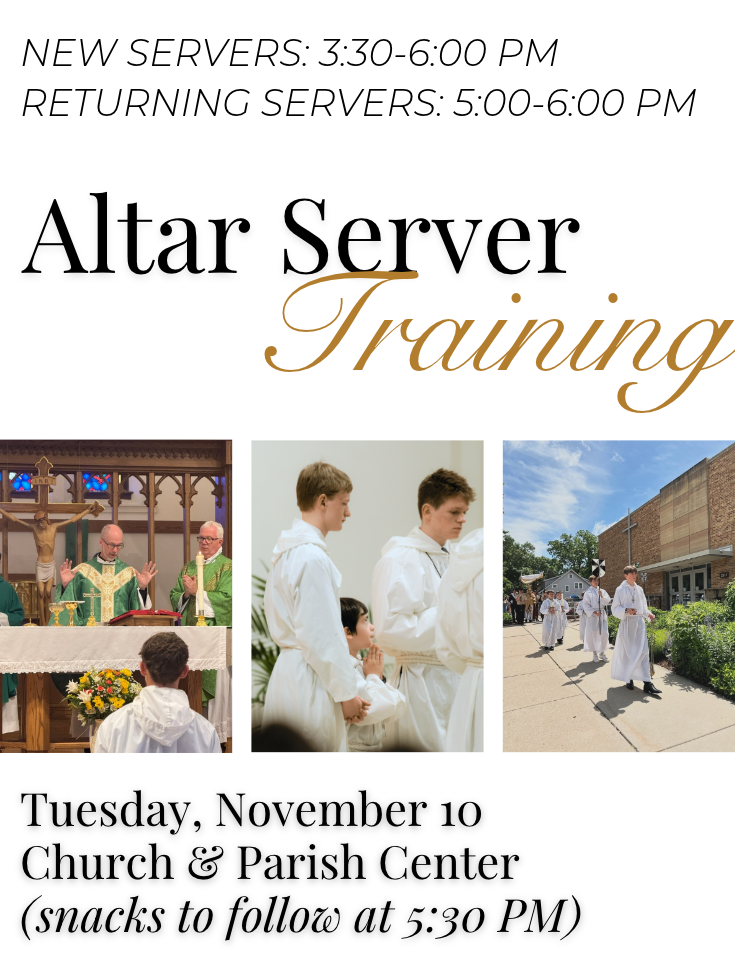
Altar Server Training
TODAY: Tuesday, November 10
3:30-6:00 PM
Church & Parish Center (for PIZZA!)
New Servers: 3:30-6:00 PM
Returning Servers: 5:00-6:00 PM
Children in grades 4 and up may become altar servers! To take on this honor and responsibility, we offer this training each fall. New servers should come at 3:30 PM, with returning servers coming for a refresher at 5:00 PM. Pick up at the parish center after PIZZA at 5:30 PM.
Questions: Victor Escalona (victor@blsacrament.org)